
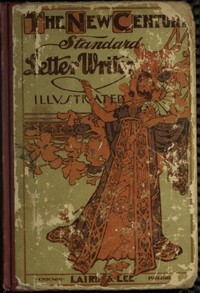
The New Century Standard Letter-Writer by Alfred B. Chambers
Let's be clear from the start: this isn't a storybook. 'The New Century Standard Letter-Writer' is exactly what it says on the cover—a manual. Published in 1900, it's a collection of templates. Alfred B. Chambers provides example letters for every occasion a person at the dawn of the 20th century might face.
The Story
There's no protagonist or plot twist. Instead, the 'story' unfolds through the letters themselves. You get templates for everything: applying for a job, thanking someone for dinner, breaking off an engagement, collecting a debt, or consoling a friend on the loss of a child. You move from the simple 'Letter from a Young Lady Accepting an Invitation to Drive' to the painfully formal 'From a Young Man to a Lady, Apologizing for Improper Conduct.' Each letter is a perfectly crafted piece of social armor, showing you the 'right' way to say things.
Why You Should Read It
This is where it gets fascinating. The book is a window into a world where every social interaction had a script. Reading these templates, you start to feel the pressure. How do you tell someone you love them when the sample letter is stiff and full of 'esteem'? The drama is all in what's not said. The 'Letter from a Son Asking Forgiveness' is dripping with formality, making you wonder what huge family rift it's trying to paper over. It’s a masterclass in subtext. You're not just learning how to write a letter; you're learning how people were expected to feel (or, more accurately, not feel) in public.
Final Verdict
Don't read this for a thrilling narrative. Read it as a fascinating piece of social history. It's perfect for anyone curious about the past, writers looking to understand period manners, or just people who love weird old books. It’s surprisingly human. Behind all the 'Respected Sirs' and 'I remain your obedient servant' signatures, you can hear the whispers of real heartache, ambition, and hope. It reminds you that while the stationery and ink have changed, the messy emotions we try to put into words haven't.
No rights are reserved for this publication. You are welcome to share this with anyone.
Richard Miller
1 week agoI appreciate the objective tone and the evidence-based approach.
John Taylor
2 weeks agoI appreciate how this edition approaches the core problem, the chapter on advanced strategies offers insights I haven't seen elsewhere. It’s a comprehensive resource that doesn't feel bloated.
Sarah Thompson
1 month agoIt’s rare to find such a well-structured narrative nowadays, the practical checklists included are a great touch for real-world use. I am looking forward to the author's next publication.
Matthew Johnson
11 months agoExtremely helpful for my current research project.






Nancy Martin
1 month agoThis digital copy caught my eye due to its reputation, the emphasis on ethics and sustainability within the topic is commendable. Well worth the time invested in reading it.