About 193 minutes
The Confessions of Harry Lorrequer — Volume 1 — Reading Companion
Exploration Survival Adventure Tales
44,313 recorded words. 26 minutes difference from this book's estimate.
View Gutenberg source #5234
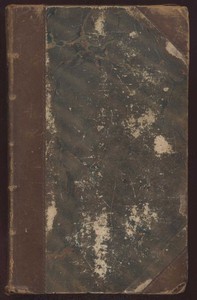
Before opening The Confessions of Harry Lorrequer — Volume 5 — Reading Notes, the edition data offers a quick orientation: 38,207 words, 2 hr 47 min estimated reading time, and 4 detected text sections.
The text analysis averages about 28.0 words per sentence, while the detected sections provide another way to judge how the source is divided.
Project Gutenberg metadata also associates the work with “Fiction,” connecting these edition facts with the source record’s subject description.
Explore this collection
These alternatives are selected using recorded categories and estimated reading time.
About 193 minutes
Exploration Survival Adventure Tales
44,313 recorded words. 26 minutes difference from this book's estimate.
View Gutenberg source #5234About 134 minutes
Exploration Survival Adventure Tales
30,778 recorded words. 33 minutes difference from this book's estimate.
View Gutenberg source #4428About 131 minutes
Exploration Survival Adventure Tales
29,972 recorded words. 36 minutes difference from this book's estimate.
View Gutenberg source #4416Search stored excerpts and compare books → Choose by your preferences →
Choices use stored catalog measurements. Estimates vary with reading speed. A shared category is a catalog label, not a claim that two books have the same argument or literary quality.
Search reads excerpt text stored with this catalog and links to its associated Gutenberg record. The connection is stored in the site database; this tool does not recheck that every excerpt is word-for-word identical to that external record. Excerpt search does not cover every chapter and does not verify historical publication dates.
Catalog snapshot checked: 2026-09-26. Coverage: 99 public books, 99 available source excerpts.
Calculated from edition completeness, EPUB availability, text structure and catalogue metadata. Not a user rating.
Total of 100 points, scaled to a 2.5-5.0 range. Editions with an empty description or a missing EPUB file are not scored.
Public-domain source text
The source text is kept in the dedicated reader, separate from this catalogue record and its commentary.
Charles Lever’s fifth volume of Harry Lorrequer’s confessions opens with a verse mocking military life—pipe-clay caps and curses on the Horse Guards—before plunging into a Parisian search for a second. The narrator’s voice, at once self-deprecating and blithe, sets the tone for a sequence of duels, misunderstandings, and comic mishaps. Lever’s diction leans into the colloquial and the theatrical: characters speak in clipped, urgent exchanges, and physical comedy—such as O’Leary’s insistence that a bullet in the brain is a mere inconvenience—drives the plot. Hablot Knight Browne’s engravings, referenced in the text, amplify the farcical register.
Lever’s dialogue relies on rapid, almost stage-like exchanges. When Trevanion accosts Lorrequer in the Tuileries, the conversation moves from a dropped pocket-book to recognition within three lines: “May I ask if this be your property?” / “I think I am not mistaken; I have the pleasure to see Mr. Lorrequer.” This economy of speech, paired with Lorrequer’s internal commentary (“With a most anxious eye I scanned the lists”), creates a rhythm of tension and release. The author often undercuts dramatic moments with absurdity—O’Leary, after being shot, arranges himself “corpse fashion” and demands Lorrequer shoot “that grinning baboon.” Such juxtapositions reveal Lever’s preference for farce over sentiment.
The narrative is anchored in specific Parisian locales—Galignani’s library, the Palais Royale, Meurice’s hotel—which serve as backdrops for chance encounters and social maneuvering. Lorrequer’s search for a second becomes a tour of English haunts: “the Rue Rivoli, and the Place Vendome,” where he finds only “long catalogues of ‘Milors,’ with their ‘couriers.’” These details ground the story in a recognizable expatriate milieu, while the contrast between the formal French setting and the Irish characters’ boisterous behavior heightens the comedy. The inn at Munich, depicted in Browne’s engraving, similarly functions as a stage for cross-cultural misunderstandings.
Lever devotes surprising attention to the mechanics of Lorrequer’s wound. The ball “passed through from one side to the other, without apparently touching the bone,” and the bullet and coat fragment lie in the sleeve. The narrator, “just surgeon enough to guess that an artery had been cut,” describes the ligature procedure with clinical precision. Yet this realism is undercut by O’Leary’s parallel injury—a bullet in the brain that leaves him unconscious but later walking and talking. The juxtaposition of genuine medical detail with absurd survival creates a tonal dissonance characteristic of Lever’s style, where bodily harm is both real and ridiculous.
The search for a second drives the plot of Chapter XXIX, and the role itself becomes a source of humor. Lorrequer’s desperation—“I set out upon a search through the various large hotels”—contrasts with the eventual appearance of Trevanion, who is both a savior and a straight man. Later, O’Leary’s behavior as a wounded second subverts the code of honor: he refuses to leave the ground, insists on a dying request, and treats the duel as a theatrical performance. Lever uses the formal structure of the duel—seconds, weapons, rules—as a framework for chaos, suggesting that military honor is a flimsy pretext for farce.
Readers attentive to Lever’s verbal play will note how the narrator’s confessions are less about truth than about performance. The volume’s episodic structure rewards those who follow the rhythm of its set-pieces—duels, recoveries, and romantic entanglements—without expecting psychological depth. Browne’s illustrations, though not reproduced here, are worth seeking out for their visual commentary on the text’s slapstick energy.
I finished that fifth volume last night, and the chaos of it lingers like a half-remembered joke. There’s a warmth in Harry’s blunders, a tenderness underneath the farce, that made me think of the earlier volume’s quieter beginnings. Somehow, both feel like old friends. The Confessions of Harry Lorrequer — Volume 1 — Reading Companion sits near my chair, and I keep glancing at it.
Your answers remain private and are stored only in this browser.