About 104 minutes
An Egyptian Princess — Volume 08 — Text and Context
Fantasy Juvenile Worlds
23,712 recorded words. 7 minutes difference from this book's estimate.
View Gutenberg source #5457
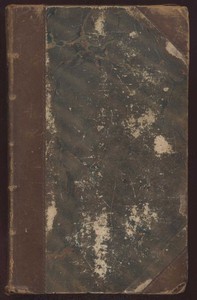
The catalog record for The Confessions of Harry Lorrequer — Volume 3 — Inside the Classic provides practical reading context through 22,111 words, 1 hr 37 min estimated reading time, and 3 detected text sections.
The text analysis averages about 30.8 words per sentence, while the detected sections provide another way to judge how the source is divided.
Project Gutenberg metadata also associates the work with “Fiction,” connecting these edition facts with the source record’s subject description.
Explore this collection
These alternatives are selected using recorded categories and estimated reading time.
About 104 minutes
Fantasy Juvenile Worlds
23,712 recorded words. 7 minutes difference from this book's estimate.
View Gutenberg source #5457About 105 minutes
Fantasy Juvenile Worlds
24,067 recorded words. 8 minutes difference from this book's estimate.
View Gutenberg source #5455About 113 minutes
Fantasy Juvenile Worlds
25,931 recorded words. 16 minutes difference from this book's estimate.
View Gutenberg source #4432Search stored excerpts and compare books → Choose by your preferences →
Choices use stored catalog measurements. Estimates vary with reading speed. A shared category is a catalog label, not a claim that two books have the same argument or literary quality.
Search reads excerpt text stored with this catalog and links to its associated Gutenberg record. The connection is stored in the site database; this tool does not recheck that every excerpt is word-for-word identical to that external record. Excerpt search does not cover every chapter and does not verify historical publication dates.
Catalog snapshot checked: 2026-09-26. Coverage: 99 public books, 99 available source excerpts.
Calculated from edition completeness, EPUB availability, text structure and catalogue metadata. Not a user rating.
Total of 100 points, scaled to a 2.5-5.0 range. Editions with an empty description or a missing EPUB file are not scored.
Public-domain source text
The source text is kept in the dedicated reader, separate from this catalogue record and its commentary.
Volume 3 of The Confessions of Harry Lorrequer opens with a marked change in narrative pace. Where earlier volumes raced through regimental pranks, this installment begins with a reluctant departure: Harry receives orders for detachment duty, a shift that Lever signals by slowing the prose into a catalogue of lost comforts—the mess, flirtations, and sporting matches of garrison life. The opening poem, a quatrain about soldiers smoking, sighing, and praying for a route to Cork or Galway, sets a rueful tone that colors the chapters to come.
Lever’s narrator becomes more self-aware here, pausing to reflect on his own storytelling. When Harry declines a travel companion with a list of reasons, his friend Tom interrupts: “Confound your thirdly. I suppose we shall have sixteenthly, like a Presbyterian minister’s sermon.” This meta-commentary on the narrator’s tendency to digress hints at a voice that is beginning to question its own reliability.
The first chapter, “Detachment Duty—An Assize Town,” establishes a new structural rhythm. Harry’s complaint about leaving the capital mess is delivered in a single, sprawling sentence that mimics the tedium he describes: “To surrender your capital mess, with all its well-appointed equipments—your jovial brother officers—hourly flirtations with the whole female population… to surrender all these, I say, for the noise, dust, and damp disagreeables of a country inn.” The dashes and repetitions create a breathless, cumulative effect, as if the narrator is trying to outrun his own grievance.
Lever varies this pace by inserting a brief, comic anecdote about a misunderstanding at the theatre. Mr. Burke, mistaking a box-keeper’s hint that the “Indians” are from Galway for an insult, fells the man. The dialogue here is clipped and fast, a sharp contrast to the earlier catalogue. This alternation between expansive complaint and rapid-fire farce becomes a structural principle for the volume.
In “A Night at Howth,” Lever uses dialogue to control tempo. Harry’s exchange with Tom is a series of interruptions and overlapping voices. Tom proposes a chaperoning arrangement; Harry demurs with a numbered list of objections. Tom cuts him off: “Confound your thirdly. I suppose we shall have sixteenthly, like a Presbyterian minister’s sermon.” The banter is quick, with short lines and no descriptive padding, creating a sense of real-time conversation.
Yet Lever also slows the scene with longer speeches. Harry’s second objection—“with my present hopes and fears weighing upon my mind”—introduces a reflective note that the brisk dialogue cannot sustain. The result is a push-and-pull between the narrator’s desire to confide and his friend’s impatience. This tension mirrors the volume’s larger movement from social comedy toward something more introspective.
The volume’s later chapters shift from stationary episodes to movement. Harry’s journey to Paris, announced in “A Night at Howth,” changes the narrative’s center of gravity. The earlier chapters are set in specific, confined locations—an inn, a theatre, a Dublin street—but the travel chapters open up the geography. Lever marks this shift by reducing descriptive passages and increasing dialogue, as if the motion of travel demands quicker exchanges.
However, the excerpts do not reveal whether the journey fulfills the reflective promise of the opening. The narrator’s “hopes and fears” remain vague, and the travelogue may revert to farce. Readers should attend to how Lever balances the picaresque momentum of the road with the quieter, more self-conscious voice that emerges in the volume’s first pages. The tension between these two modes—one rushing forward, the other pausing to complain—defines the reading experience.
This volume rewards attention to its shifts in tempo. Lever’s narrator is not merely a raconteur but a character whose voice changes with his circumstances. When the prose slows into catalogues of complaint, listen for the self-mockery beneath the grievance. When dialogue quickens, note how interruptions and asides reveal the limits of Harry’s self-knowledge. The journey that frames the later chapters may or may not resolve these tensions; the pleasure lies in watching the narrator try to keep pace with his own story.
Sitting with Lorrequer’s third volume, I noticed how the chatter of Dublin fell away into the quiet strangeness of Paris. That drift—from noise to reflection—kept echoing in my memory of The Prodigal Judge — Story, Setting & Ideas, where the road likewise pulls a man away from himself. There’s a shared ache there, a soft bewilderment worth turning back to.
Your answers remain private and are stored only in this browser.