About 282 minutes
The Queen of Sheba, and My Cousin the Colonel — Inside the Classic
Fantasy Juvenile Worlds
64,724 recorded words. 11 minutes difference from this book's estimate.
View Gutenberg source #5705
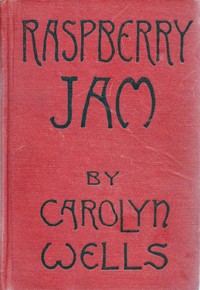
Before opening Raspberry Jam — Reading Companion, the edition data offers a quick orientation: 67,172 words, 4 hr 53 min estimated reading time, and 7 detected text sections.
The text analysis averages about 12.9 words per sentence, while the detected sections provide another way to judge how the source is divided.
Project Gutenberg metadata also associates the work with “Detective and mystery stories,” connecting these edition facts with the source record’s subject description.
Explore this collection
These alternatives are selected using recorded categories and estimated reading time.
About 282 minutes
Fantasy Juvenile Worlds
64,724 recorded words. 11 minutes difference from this book's estimate.
View Gutenberg source #5705About 279 minutes
Fantasy Juvenile Worlds
63,984 recorded words. 14 minutes difference from this book's estimate.
View Gutenberg source #5079About 273 minutes
Fantasy Juvenile Worlds
62,734 recorded words. 20 minutes difference from this book's estimate.
View Gutenberg source #4720Search stored excerpts and compare books → Choose by your preferences →
Choices use stored catalog measurements. Estimates vary with reading speed. A shared category is a catalog label, not a claim that two books have the same argument or literary quality.
Search reads excerpt text stored with this catalog and links to its associated Gutenberg record. The connection is stored in the site database; this tool does not recheck that every excerpt is word-for-word identical to that external record. Excerpt search does not cover every chapter and does not verify historical publication dates.
Catalog snapshot checked: 2026-09-26. Coverage: 99 public books, 99 available source excerpts.
Calculated from edition completeness, EPUB availability, text structure and catalogue metadata. Not a user rating.
Total of 100 points, scaled to a 2.5-5.0 range. Editions with an empty description or a missing EPUB file are not scored.
Public-domain source text
The source text is kept in the dedicated reader, separate from this catalogue record and its commentary.
The novel opens not with a corpse but with a dispute over telepathy. Aunt Abby brandishes a newspaper clipping about the Great Hanlon, a blindfolded walk through Newark to find a hidden object, while Eunice Embury flits about her Park Avenue apartment, adjusting carnations and pillows with a butterfly's restlessness. This domestic scene—punctuated by Aunt Abby's determined black eyes and Eunice's dismissive murmurs—establishes a household where skepticism and credulity clash. The dialogue is brisk, colloquial, and character-revealing: Aunt Abby's rambling enthusiasm contrasts with Eunice's preoccupied grace. Wells uses these early exchanges to plant the novel's central tension between rational explanation and the allure of the inexplicable, a theme that will resurface when a death occurs and the investigation begins.
The opening argument between Aunt Abby and Eunice showcases Wells's ear for conversational friction. Aunt Abby's speech is peppered with interjections—"You may contradict me as flat as a flounder"—and self-interruptions: "Let me see—oh, yes—'Hanlon—' H'm—h'm—why, my goodness!" This breathless, associative style contrasts with Eunice's clipped, ironic responses: "If you could read my mind, Aunt Abby, you'd drop that subject." Wells uses these verbal tics to define character without explicit description. Aunt Abby's diction is that of a woman who reads newspapers aloud and relishes the sound of her own convictions; Eunice's is that of someone who deflects engagement through busywork. The dialogue does not merely advance plot—it performs the power dynamics of the household, where Aunt Abby's enthusiasm is met with polite but firm resistance.
When Detective Driscoll confronts Eunice, the scene shifts from domestic banter to a tense interrogation. Wells controls pacing through stage directions: Eunice "stepping back from the advancing figure," her hand "clenching a chair-back." The detective's language is blunt and circumstantial—he describes finding a medicine dropper "half full of something" and connecting it to a recent production of Hamlet. His explanation is methodical, almost pedantic, as he recounts reading a medical journal about poison through the ear. Eunice's response is immediate and accusatory: "You put it there yourself—it's what you call a frame-up!" The exchange reveals Wells's interest in how suspicion is constructed through narrative—the detective's chain of reasoning is laid out step by step, while Eunice's denials are equally emphatic. The scene leaves the reader uncertain, not because evidence is hidden, but because competing interpretations are voiced with equal force.
Wells places unusual weight on physical objects as carriers of meaning. The medicine dropper is the linchpin of the detective's theory, but its significance is contested: Eunice claims never to have seen it, while Miss Ames insists it was not in the bathroom. The dropper is described with clinical precision—"half full of something"—and its contents identified as henbane, a poison with literary associations. Wells also uses domestic objects to characterize: Eunice's adjustment of carnations and pillows in the opening scene suggests a fastidiousness that may or may not extend to concealment. The novel's title, Raspberry Jam, hints at another object that may carry weight, though the excerpts do not reveal its role. This focus on tangible clues—a dropper, a newspaper clipping, a theater ticket—grounds the mystery in the material world, even as the plot flirts with telepathy and the supernatural.
Wells differentiates her characters through the rhythm and register of their speech. Detective Shane is gruff and dismissive: "No use blustering, Mrs. Embury." Driscoll, by contrast, is calmer and more authoritative, using longer sentences and explanatory pauses: "It's this way, Mr. Elliott." Eunice's voice shifts from the languid irony of the opening to a "tense with concentrated rage" in the confrontation. Aunt Abby's voice is a constant of enthusiastic interruption. These vocal contrasts create a layered social world where authority is negotiated through tone. The detectives assert dominance through declarative statements; the women resist through indignation or deflection. Wells does not label her characters as reliable or unreliable; instead, she lets their voices compete, leaving the reader to judge credibility from the texture of their speech.
Wells's prose rewards attention to its surface: the way a character interrupts herself, the precise description of a gesture, the weight given to a single object. Readers may find that the mystery's solution matters less than the process of accusation and denial that precedes it. The novel's early twentieth-century setting—with its Park Avenue apartments, butlers, and matinee performances—provides a backdrop of social formality against which the characters' raw emotions stand out. Approach the text as a study in how people talk past each other, and how evidence becomes a story told by the most persuasive voice.
That clever dropper of henbane in Raspberry Jam always reminds me of a certain old house where secrets hide in plain sight, like the quiet shadow of a pine tree. Fleming Stone’s patient unraveling feels kin to another New England tale, one of stubborn roots and unspoken things—The Landlord at Lion's Head — Complete — Edition Insights—both knowing how much a single silence can reveal.
Your answers remain private and are stored only in this browser.