About 681 minutes
Their Silver Wedding Journey — Complete — Inside the Classic
Exploration Survival Adventure Tales
156,481 recorded words. 26 minutes difference from this book's estimate.
View Gutenberg source #4646
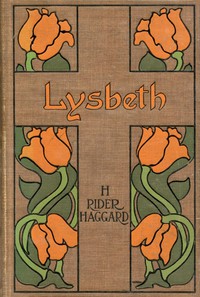
The catalog record for Lysbeth, a Tale of the Dutch — Story, Setting & Ideas provides practical reading context through 162,606 words, 11 hr 47 min estimated reading time, and 33 detected text sections.
The text analysis averages about 20.7 words per sentence, while the detected sections provide another way to judge how the source is divided.
Project Gutenberg metadata also associates the work with “Netherlands -- History -- House of Habsburg, 1477-1556 -- Fiction,” connecting these edition facts with the source record’s subject description.
Explore this collection
These alternatives are selected using recorded categories and estimated reading time.
About 681 minutes
Exploration Survival Adventure Tales
156,481 recorded words. 26 minutes difference from this book's estimate.
View Gutenberg source #4646About 670 minutes
Exploration Survival Adventure Tales
154,008 recorded words. 37 minutes difference from this book's estimate.
View Gutenberg source #5257About 814 minutes
Exploration Survival Adventure Tales
187,090 recorded words. 107 minutes difference from this book's estimate.
View Gutenberg source #5274Search stored excerpts and compare books → Choose by your preferences →
Choices use stored catalog measurements. Estimates vary with reading speed. A shared category is a catalog label, not a claim that two books have the same argument or literary quality.
Search reads excerpt text stored with this catalog and links to its associated Gutenberg record. The connection is stored in the site database; this tool does not recheck that every excerpt is word-for-word identical to that external record. Excerpt search does not cover every chapter and does not verify historical publication dates.
Catalog snapshot checked: 2026-09-26. Coverage: 99 public books, 99 available source excerpts.
Calculated from edition completeness, EPUB availability, text structure and catalogue metadata. Not a user rating.
Total of 100 points, scaled to a 2.5-5.0 range. Editions with an empty description or a missing EPUB file are not scored.
Public-domain source text
The source text is kept in the dedicated reader, separate from this catalogue record and its commentary.
H. Rider Haggard structures Lysbeth, a Tale of the Dutch in three named books—The Sowing, The Ripening, and The Harvesting—each marking a phase in the struggle of a burgher family under Spanish rule. The narrative moves between domestic interiors, ships, and prisons, with recurring attention to a sword called Silence and a hidden hoard of treasure. These objects anchor the plot while the characters navigate betrayal, loyalty, and the constant threat of the Inquisition.
The novel is divided into three books, each with its own title and set of chapters. The first, The Sowing, introduces the central conflict and the characters of Lysbeth, Dirk, and the antagonist Montalvo. The second, The Ripening, shifts focus to the next generation—Adrian, Foy, and Martin the Red—and escalates the danger. The third, The Harvesting, brings the story to its climax. This structure mirrors the agricultural metaphor of the title, suggesting that actions and choices will yield consequences over time. The chapter headings often hint at key events, such as “The Dream of Dirk” or “How Martin Turned Coward,” giving the reader a sense of impending drama.
Two objects recur throughout the excerpts: the sword Silence and a hidden treasure. The sword is personified, described as having “drunk blood throughout the generations,” and is used as a tool of both violence and secrecy. In one scene, Martin drops the sword on Foy’s foot to stop him from revealing too much about the treasure’s location. The hoard itself is a source of tension—its secret is known to Martha, the “witch of Haarlem Meer,” and the characters debate whether it can be kept safe. These objects tie the plot together, creating a sense of continuity across the three books.
The excerpts show rapid shifts in setting: from a ship being blown up with Spanish boarders, to a sitting-room where Foy recounts the story, to a prison cell (the Gevangenhuis). The narrative moves between action and reflection, often using dialogue to convey past events. For example, Foy’s retelling of the ship explosion is interrupted by Elsa’s horror and Dirk’s grim approval. This technique allows Haggard to compress time while maintaining suspense. The settings themselves—the sea, the home, the torture chamber—reflect the characters’ vulnerability and the pervasive threat of the Spanish authorities.
The dialogue in the excerpts is marked by warnings and veiled meanings. Martin repeatedly advises Foy to trust no one, saying “bridle your tongue and trust no one, no, not your father or mother, or sweetheart, or brother.” The characters speak in half-truths, aware that informants are everywhere. This creates a atmosphere of paranoia. The exchange between Foy and Martin about the treasure’s secret reveals the tension between youth and experience: Martin, older and more cautious, must correct Foy’s impulsiveness. The voice of Martin is particularly distinctive, using homely metaphors like “mares can gallop and ducks can dive” to express the impossibility of extracting the secret from Martha.
Readers should pay attention to how Haggard uses objects and settings to advance the plot without relying on lengthy exposition. The sword Silence and the hidden hoard are not mere props but carry symbolic weight, representing the legacy of violence and the hope of survival. The novel’s structure, with its clear division into phases, invites comparison between the generations and their responses to tyranny.
There’s a particular stillness in Lysbeth — oaths kept across decades, like seeds buried until the right season. It made me think of how, in a completely different way, the quiet waiting in The Auction Block carries its own weight, the patience of people measuring what they’re truly willing to lose. The Auction Block — Reading Companion feels like that same silence, held differently.
Answer a few questions and save a private reflection on this device.